The Harbour Wall Before the Marina: A Short History of Working Quays
Working quays reveal how harbour walls changed with cargo, boats and tides, helping you read the practical history built into a waterfront.
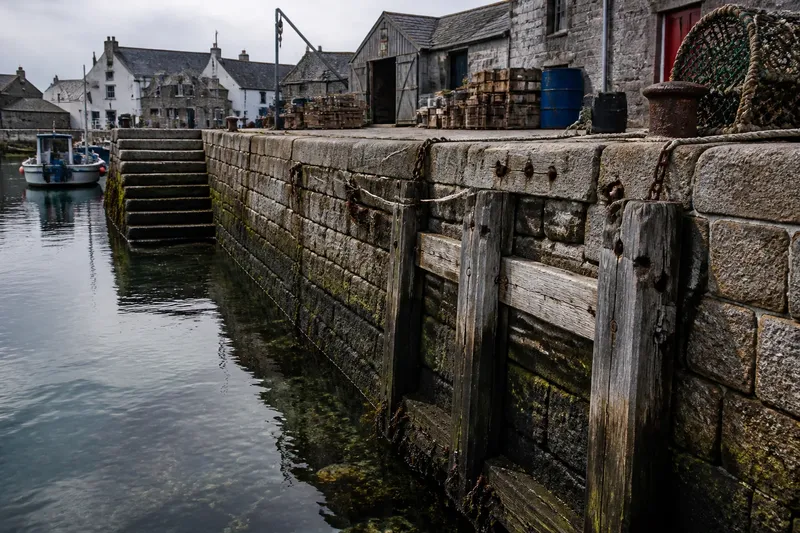
A working quay was built to bring boats and goods together at the water’s edge, and its shape still records that purpose. A harbour wall might look like a single barrier today, but a closer walk often reveals successive decisions: where a vessel could berth, how cargo reached land, and what happened when the harbour’s work changed. The history of working quays is legible in those practical joins.
A harbour in transition
Imagine a small, entirely hypothetical harbour called Bracken Inlet. Its sheltered inner shore serves fishing boats and a modest coastal trade. At first, boats come alongside a sloping landing where people carry baskets and bundles ashore. As heavier cargo begins to arrive, the harbour needs a firmer, more dependable edge: a quay with enough depth for vessels to lie alongside and enough room above the water for handling goods.
This invented situation is not a record of a real place. It offers a way to follow how working waterfronts can develop. The first change at Bracken Inlet is not a grand plan, but a shift in the task. Landing a small boat tolerates a rough margin; transferring bulky loads calls for a stable, accessible face.
Look for the difference between a landing place and a quay. A landing may be a beach, ramp or low platform used for coming ashore. A quay is generally a built edge beside water, allowing vessels to lie alongside. The words vary by place, but the distinction helps explain why a harbour wall’s profile can tell you more than its height alone.
Edges made for cargo
At Bracken Inlet, the new quay is imagined as a robust wall with a level working surface behind it. Its face provides a berth; its top offers space to sort, stack or move goods. Steps or a sloping access point may serve smaller craft, while a broader stretch of edge suits vessels that need to come alongside. The working surface matters as much as the masonry: a quay must connect water to the routes inland.
Materials also reflect local conditions and available craft. Stone blocks, rubble masonry, brick, timber and later concrete may appear in different harbour settings. A wall can be repaired or extended with a different material from its original build, so a change in colour or texture is a clue to look more closely, not a date by itself.
In the hypothetical harbour, imagine a later repair in which a timber fender is fixed to a stone edge. The fender gives a boat a softer point of contact, while the old wall remains in use. The visible result is a layered edge: a durable structure altered to accommodate the way vessels meet it.
Reading a changing wall
As cargo at Bracken Inlet changes, so do the demands on the quay. A harbour serving small fishing craft might need convenient access to boats and places to land catches. If bulkier goods become common, the working edge may be extended, a landing surface raised, or space behind the wall cleared for storage and movement. These are possible responses, not a fixed sequence every harbour follows.
When walking a waterfront, observe the relationship between the wall and its surroundings. Does the quay continue at one level, or does it step down? Are there openings, stairs, ramps or projecting platforms? Does the surface behind it connect directly to a road, shed or open yard? Each feature suggests a practical use, though no single detail proves what happened there.
At Bracken Inlet, suppose an old stretch of quay sits lower than a later, straighter section. That change might reflect a rebuilding, a different working level, or a separate function along the same harbour. The useful observation is the contrast itself. A reader can then look for supporting clues—such as a blocked opening or a change in facing stone—rather than assigning a story from one feature alone.
From work edge to marina?
In the invented case, cargo handling eventually becomes less central, while leisure boats begin to use the harbour. The old quay does not automatically become a marina, and its earlier role does not vanish. Instead, some parts may suit mooring and walking, while others prove awkward for pleasure craft or public access. The modern marina is a different arrangement of berths and services; the older quay remains evidence of a harbour organised around loading and landing.
This distinction matters when reading a waterfront that has been tidied or adapted. New railings, paving or mooring fittings can obscure earlier uses, but the basic geometry may persist: a long, continuous face for vessels alongside, a recessed landing, or a broad apron where goods once moved. The wall’s present appearance is not its whole history.
For Bracken Inlet, picture a short run of the old quay retained beside newer floating pontoons. The expected observable result is a contrast between a fixed masonry edge and a water-following berth system. That contrast indicates different ways of accommodating boats; it does not, by itself, establish when or why each was installed.
Questions about working quays?
What is the difference between a quay and a harbour wall?
A harbour wall is a broad term for a structure that protects or defines a harbour edge. A quay is a waterfront structure intended to let vessels lie alongside and support activity on the landward side.
Why do some quays have steps?
Steps can provide access between the working surface and lower water levels, particularly for people or small craft. Their position and shape may also reflect the way a particular part of the harbour was used.
Can a quay’s materials reveal its age?
Materials can help distinguish building phases, especially where a repair meets an older wall. They cannot reliably date a structure on their own, since old materials may be reused and later repairs may copy earlier work.
How can I tell whether a wall was built for loading?
Look for a usable surface behind a continuous vessel-facing edge, alongside access routes or former storage spaces. Treat these as clues to a working function rather than proof of a particular cargo or period.
What the edge preserves
The hypothetical harbour’s lesson is that a quay is not merely a boundary between land and water. It is an interface shaped by the work expected of it, then altered as boats, cargo and access needs change. Following those changes means reading the whole setting: wall face, working surface, approach and neighbouring structures.
When you next walk a harbour, pause where the edge changes height, material or direction. The history of working quays often begins at that small interruption, where one kind of use met another and the harbour’s practical shape had to change.